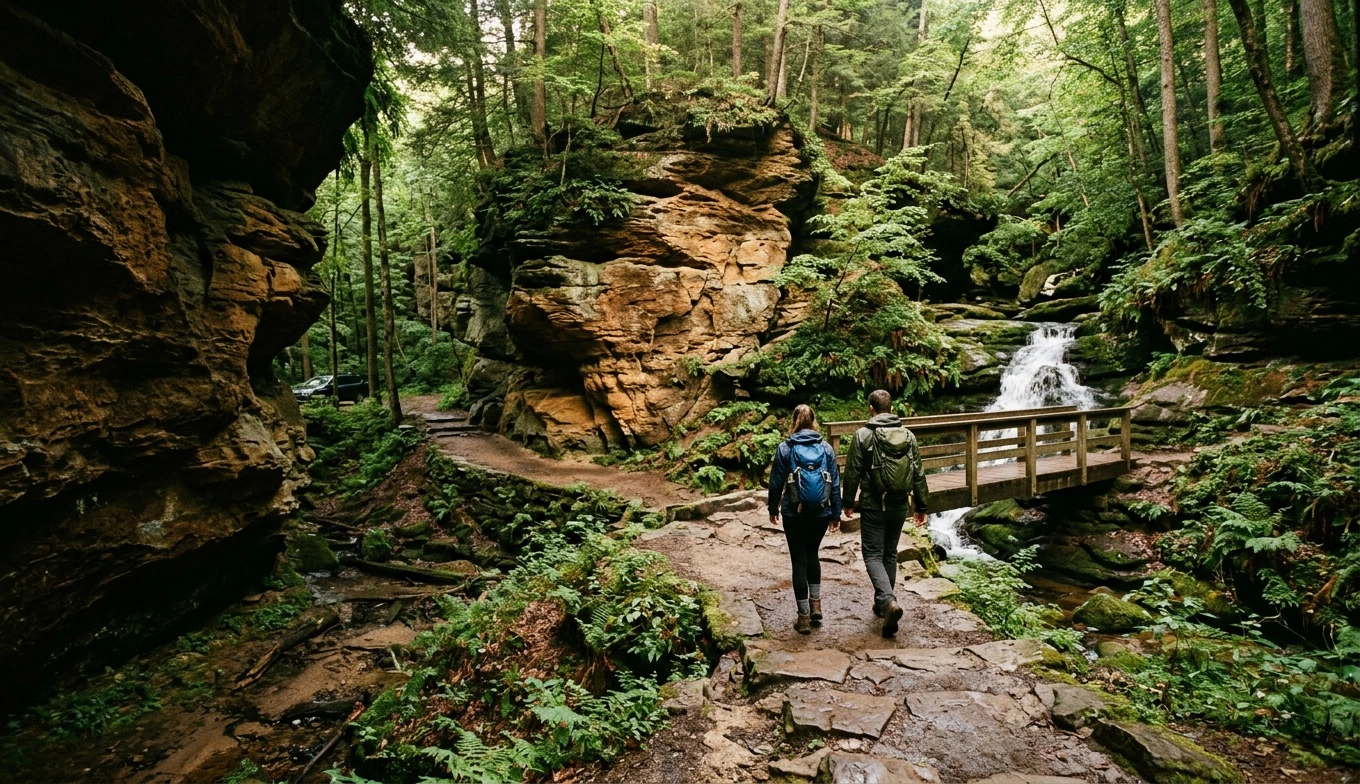
A Hocking Hills day trip from Columbus works best with an early start. Reach Old Man’s Cave first, then save the southern stops for later. Plan on 10 to 12 hours door to door, including about 2.5 to 3 hours of driving.
This itinerary covers Old Man’s Cave, Cedar Falls, and Ash Cave at a realistic pace. Most visitors will hike about three to five miles. Sandstone steps, uneven ground, and repeated elevation changes make the trails more tiring than the mileage suggests.
Spring usually brings the strongest waterfalls, while fall draws the largest crowds. A dry weekday in late spring or early autumn often provides the easiest conditions. Summer works well with an early start, but icy winter trails may require traction devices or a change of plans.
Pack lunch, water, sturdy shoes, and an offline map. Cell service becomes unreliable as you enter the hills. Before leaving, check current closures, hours, parking rules, and pet policies with the Ohio Department of Natural Resources and Ohio State Parks.
Hocking Hills Day Trip from Columbus at a Glance
This schedule suits first-time visitors who want to see the main gorge scenery without rushing. It starts at Old Man’s Cave because that trail system draws heavy traffic. Crowds become especially thick on fair-weather weekends and during October.
The route continues south to Cedar Falls and Ash Cave. This order limits backtracking on narrow local roads. Still, driving times can increase during rain, peak fall color, or trailhead backups.
Build at least 15 minutes of flexibility into each stop. Parking, restroom lines, and trail navigation can all cause delays. On a Saturday, holiday weekend, or peak fall day, leave Columbus by 6:30 a.m.
| Approximate time | Plan | How long to allow | Local advice |
|---|---|---|---|
| 6:30–7:00 a.m. | Leave Columbus | 1 hour 15 minutes to 1 hour 30 minutes | Eat breakfast before reaching the park or bring it with you. |
| 8:00–10:00 a.m. | Old Man’s Cave | 1.5 to 2 hours | Arrive before the parking rush and follow posted trail directions. |
| 10:00–10:20 a.m. | Drive to Cedar Falls | 10 to 20 minutes | Watch for sharp curves, cyclists, hills, and stopped traffic. |
| 10:20–11:30 a.m. | Cedar Falls | 45 to 70 minutes | The climb back feels harder than the short mileage suggests. |
| 11:30 a.m.–12:45 p.m. | Drive toward Ash Cave and eat lunch | 20 to 30 minutes of driving, plus lunch | Use a designated picnic area or eat at your parked vehicle. |
| 12:45–2:00 p.m. | Ash Cave | 45 to 75 minutes | The lower approach offers the easiest walk of the day. |
| 2:00–3:30 p.m. | Flexible time | 1 to 1.5 hours | Rest, revisit a missed stop, or start the drive home early. |
| 3:30–5:00 p.m. | Return to Columbus | 1 hour 15 minutes to 1 hour 30 minutes | Expect slower traffic late on busy weekends. |
Getting from Columbus to Hocking Hills
From most parts of Columbus, take US-33 southeast through Lancaster toward Hocking Hills. Your exact exit depends on your first trailhead. Load directions before leaving the city and download the surrounding map for offline use.
The final part of the drive follows two-lane roads with blind curves and steep grades. Some driveways and turns are easy to miss. Increase your following distance in rain, fog, fallen leaves, or snow, and watch for deer around dawn and dusk.
Use official parking lots rather than gravel pull-offs or road shoulders. Old Man’s Cave usually makes the most practical first stop because it sits north of the other two areas. It also has the most involved trail network.
Enter “Old Man’s Cave Visitor Center” or the official ODNR trailhead into your navigation app. A broad search for “Hocking Hills” may direct you far from the correct lot. Compare the route with the current ODNR map before departure.
Morning: Hike Old Man’s Cave Before the Rush
Old Man’s Cave combines waterfalls, recessed rock formations, gorge passages, stone steps, and footbridges. Allow 1.5 to 2 hours for a first visit. Depending on open connectors, the practical gorge route covers roughly one to two miles.
From the main parking area, follow official signs toward the gorge and Upper Falls. Stone and constructed steps lead into the cool, shaded gorge. Continue toward Old Man’s Cave and Lower Falls while following posted directions and barriers.
Photograph the trailhead map even if you downloaded a copy. Several trails and connectors meet in this area, so an unplanned turn can add considerable mileage. You could continue toward Cedar Falls without realizing how far you have gone.
The trail between Old Man’s Cave and Cedar Falls makes a worthwhile longer hike. However, it does not fit this driving itinerary. Attempt it only if your group can manage the distance and has arranged a legal return.
What the Old Man’s Cave Hike Is Really Like
The gorge often stays cool on warm mornings. Damp sandstone can also remain slick long after nearby roads have dried. Expect uneven stone, narrow passages, stairs, and short climbs instead of a level woodland path.
Water flow usually increases in winter and spring. After a dry summer stretch, the falls may slow to a trickle. Recent rain can improve the flow but also make the trail muddy and slippery.
Keep young children close near stairs, drop-offs, and crowded passages. A child carrier works better than a stroller on the main gorge route. Confirm current pet rules before visiting, and keep dogs leashed wherever officials allow them.
Stay on designated trails and behind all barriers. Falls from cliffs and rim edges have caused serious injuries and deaths here. Never climb rock faces, enter closed areas, or wade in waterfalls and pools.
Late Morning: Visit Cedar Falls
Cedar Falls has a different gorge shape and setting from Old Man’s Cave. The visit also fits comfortably into a one-day route. Driving from Old Man’s Cave usually takes 10 to 20 minutes, depending on traffic.
Allow 45 to 70 minutes for parking, hiking, and time near the falls. The designated trail descends from the parking area over steps and uneven surfaces. On the return, you must climb those steps back to the lot.
Take the descent slowly if anyone in your group has knee, balance, or heart concerns. Every step down adds to the return climb. Short mileage does not make this stop effortless.
Cedar Falls can shrink considerably during dry periods. Winter and spring usually bring stronger flow, while rain creates slick stone and wooden surfaces. If the lot is full, continue to Ash Cave instead of parking along the road or on grass.
When to Skip Cedar Falls
Skip Cedar Falls if your group feels tired after Old Man’s Cave. Wet steps can also create problems for anyone with poor balance. Ash Cave’s gentler lower approach makes better use of limited energy.
Remove Cedar Falls first if a late departure or parking delay puts the schedule behind. Two relaxed stops make a better day than three rushed hikes. The waterfall may also disappoint during a prolonged dry spell, although the gorge remains worth seeing.
Check trail conditions after storms, freezing rain, or high water. If officials close a route, do not improvise a path through the woods. Closures protect visitors from flooding, ice, unstable surfaces, and trail damage.
Lunch Without Losing an Hour
A packed lunch keeps the day on schedule. Restaurants sit throughout the region, but reaching one may require leaving the trail sequence. Store perishable food in a cooler and eat at a designated picnic area or your parked vehicle.
Pack out every wrapper, container, and food scrap. Even biodegradable waste does not belong beside a trail. Keep food secured when you leave the vehicle.
If you prefer a restaurant, budget more time than you would in Columbus. Weekend crowds can slow service, and some rural businesses keep seasonal hours. Confirm operating hours directly before adding a restaurant to the itinerary.
Carry all the drinking water you expect to need. Do not depend on fountains or concessions, since availability can change by season and location. Keep a spare bottle in the car for the final drive.
Afternoon: Finish at Ash Cave
Ash Cave works well as the final major stop. Its lower gorge approach is short and gradual after a morning on stairs. The paved route measures roughly a quarter mile each way, although current access conditions can change.
Allow 45 to 75 minutes to walk in, explore the viewing area, and return. The path follows a seasonal stream toward a broad rock shelter. Waterfall flow may become thin or disappear during dry weather, but the recess remains impressive in scale.
Stay on the official path and within designated viewing areas. Do not enter restricted water, climb the walls, or cross barriers. Sandstone can break or crumble without warning.
For a harder walk, consider the posted stair and rim connections when they are open and dry. These sections include steps, uneven ground, and exposed drop-offs. Families with young children and unsteady walkers should use the lower route.
Who Will Find Ash Cave Easiest
Ash Cave is generally the most manageable stop for older visitors and families with small children. It also suits people who want to avoid a long stair descent. However, a paved path does not guarantee easy access for every visitor or mobility device.
Grades, weather damage, maintenance, and temporary closures can affect the route. Confirm official accessibility details with ODNR if someone uses a wheelchair or another mobility aid. Precise surface and grade information matters more than a general accessibility label.
Do not assume you will find seating at every point. Bring a child carrier instead of a stroller if you plan to use a route with stairs. For a lower-effort visit, walk the paved gorge approach and return the same way.
Never use the rim trail as an improvised detour around a lower-trail closure. The upper route presents different terrain and hazards. Follow posted signs even if another path appears open.
Use Extra Afternoon Time Wisely
The open block after Ash Cave gives the schedule room to breathe. Parking waits, restroom stops, children’s pace, and photography can easily consume an hour. If the day has gone smoothly, enjoy a longer picnic or start home early.
Do not add the Conkle’s Hollow Rim Trail without checking its difficulty. The route has sheer drop-offs and limited railing. It does not suit young children who cannot stay close or visitors with balance concerns.
Conkle’s Hollow is a state nature preserve, so its rules may differ from state park rules. Check current pet restrictions and keep dogs leashed wherever authorities permit them. Never assume one area’s regulations apply throughout Hocking Hills.
If your group wants another walk, consult the official map. Choose an open trail that fits the remaining daylight and everyone’s energy. Finish well before dark because gorge trails become harder to follow after sunset.
Carry a headlamp for emergencies. Do not treat it as permission to begin a late hike. Turning around early is always better than navigating unfamiliar steps in darkness.
Parking, Restrooms, Water, and Cell Service
Use designated parking areas and check current state rules before your visit. Main trailhead lots can fill quickly on peak weekends. Old Man’s Cave usually faces the heaviest demand because many first-time visitors start there.
If a lot is full, continue to the next stop and adjust the itinerary. Do not circle repeatedly or create a roadside hazard. Never park in a travel lane, on vegetation, or beyond a barrier.
Early arrival remains the most reliable parking strategy. However, no arrival time guarantees a space during peak fall weekends. Keep alternate stops and routes saved offline.
| Area | Parking approach | Facilities planning | Signal and navigation |
|---|---|---|---|
| Old Man’s Cave | Arrive first and expect the greatest demand. | Check current visitor center and restroom information. | Download the map before leaving Columbus. |
| Cedar Falls | Use marked spaces and continue to Ash Cave if full. | Do not depend on drinking water at the trailhead. | Cell service may be weak or absent. |
| Ash Cave | Afternoon turnover may help, but busy days still cause delays. | Confirm current restroom access before the trip. | Save offline directions for the return drive. |
Cell service varies in the gorges and along park roads. Screenshot the itinerary, download the official trail map, and choose a meeting point before leaving the vehicle. If your group uses two cars, do not rely on phone contact between trailheads.
Bad-Weather Backup Plan
Light rain does not always ruin a Hocking Hills visit, but it changes the footing. Sandstone, wooden stairs, roots, and fallen leaves can become slick quickly. Wear waterproof layers and shoes with reliable tread.
If trails remain open, focus on Ash Cave’s lower approach and a shorter Old Man’s Cave visit. Slow your pace and skip exposed rim routes. Turn around if water, mud, or ice makes footing uncertain.
Avoid gorge and rim hiking during thunderstorms, high water, heavy snow, or freezing rain. Rising water, falling branches, and ice can make the trails dangerous. Officials may close routes because of flooding, storm damage, or unstable surfaces.
A short scenic drive and an indoor meal can replace hiking if the roads remain safe. Never cross a flooded road or trail. Also, do not shelter beneath rock overhangs during severe weather.
Check ODNR alerts and the local forecast immediately before leaving Columbus. Conditions can change overnight. Postpone the trip if weather or road safety remains uncertain.
If You Decide to Stay Overnight
You can complete this itinerary in one day, but an overnight stay creates a slower pace. It also gives you time for dinner and a second morning hike. Staying nearby may help you avoid a long drive after dark.
Cabins often suit couples, families, or small groups. Check the actual bed arrangement instead of relying on the maximum occupancy. If a hot tub matters, confirm that it works and review the property’s rules before booking.
Campgrounds work best for travelers who already own suitable equipment. Pay close attention to seasonal overnight temperatures. Lodges and bed-and-breakfast properties offer simpler arrivals, but popular weekends can book far ahead.
Ask about road and driveway conditions before reserving rural lodging. The final approach may include gravel, steep grades, or limited winter maintenance. Also check the real drive time to each trailhead.
A Hocking Hills mailing address does not guarantee a location near Old Man’s Cave. Confirm check-in instructions and cancellation terms directly with the property. Save arrival directions offline before leaving Columbus.
Good to Know Before You Leave Columbus
Spring usually offers stronger waterfalls along with mud and cool gorge temperatures. Summer mornings feel more comfortable than hot afternoons. Autumn weekends bring dense traffic, while winter may require traction devices.
- Start early: A midmorning departure can put you at Old Man’s Cave during its busiest hours.
- Wear sturdy shoes: Smooth sandals and worn sneakers grip wet sandstone poorly.
- Carry water: Do not assume fountains, concessions, or seasonal facilities will operate.
- Download maps: Cell service may disappear before you reach the trailhead.
- Keep the route flexible: Continue to the next stop if a parking lot is full.
- Stay on marked trails: Off-trail hiking creates fall hazards and damages fragile terrain.
- Respect cliff and water hazards: Do not climb, swim, or wade near waterfalls and rock faces.
- Check pet rules: Keep pets leashed where allowed and verify rules for each area.
Many first-time visitors try to include too many stops. Old Man’s Cave, Cedar Falls, Ash Cave, Rock House, and Conkle’s Hollow will overwhelm a single day. That schedule leaves little room for parking delays or careful hiking.
Three well-chosen areas provide enough variety for a first visit. Short trails can still demand considerable effort because of steps, grades, and wet rock. Set the pace around the least mobile person, not the fastest hiker.
Plan a Safe and Realistic Return to Columbus
Leave the park with enough daylight and energy for the drive. The return usually takes 1 hour 15 minutes to 1 hour 30 minutes. Weekend traffic, construction, weather, and your destination in Columbus can extend that time.
Save the return route offline before leaving the final parking lot. Watch for deer, sharp curves, and sudden stops on local roads. If you feel tired, take a break before continuing toward Columbus.
The best Hocking Hills day trip from Columbus focuses on time outdoors rather than a long checklist. Start at Old Man’s Cave, then enjoy Cedar Falls and Ash Cave without hurrying on wet steps. Before departure, confirm current conditions, closures, hours, rules, and facilities with ODNR and Ohio State Parks.











Share This Page