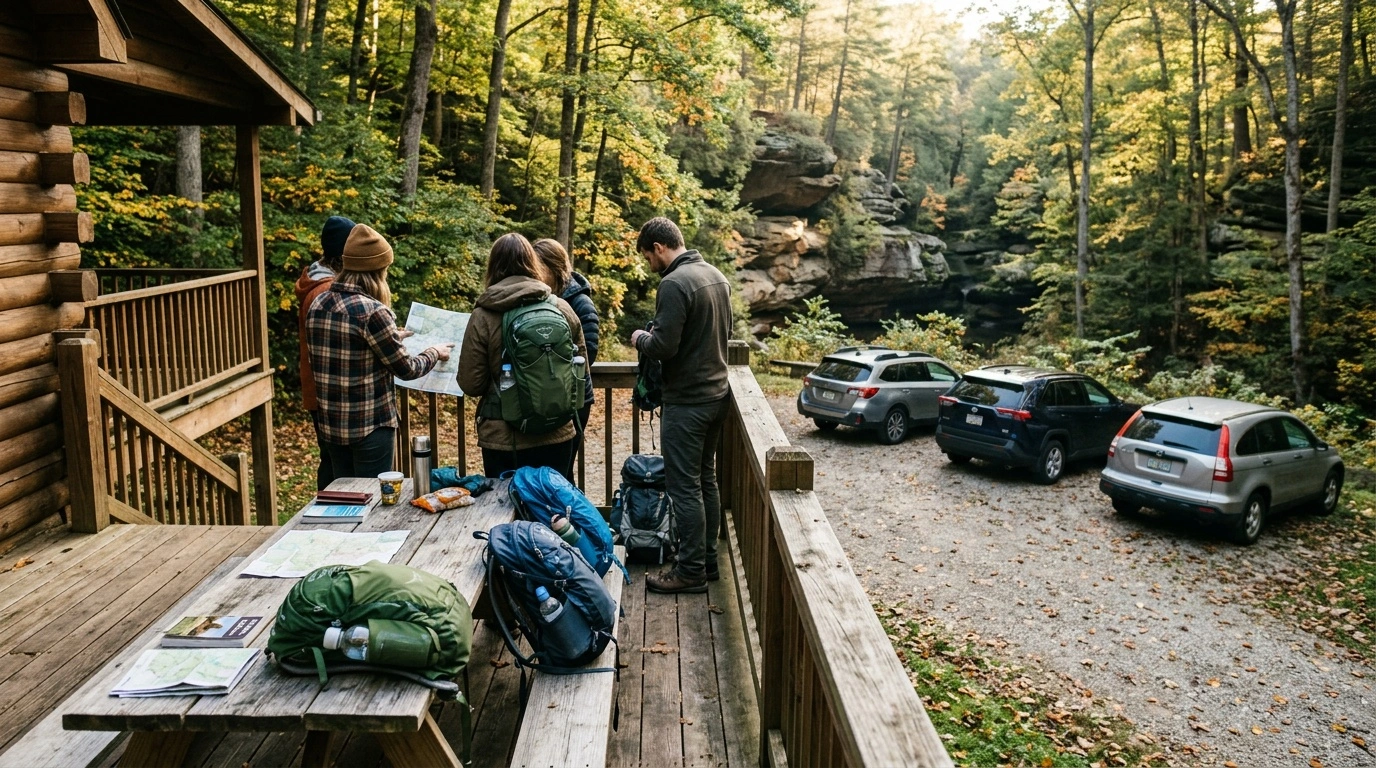
A Hocking Hills group trip for 10 or more works best when you plan parking, meals, and cabin access as carefully as the hikes. This three-day, two-night itinerary suits extended families, friend groups, reunions, and low-key celebrations.
Plan on roughly 5 to 7 miles of hiking, with shorter options for guests who need an easier day. Spring and fall offer comfortable conditions, but popular weekends bring heavy crowds. Summer calls for early starts and afternoon downtime. In winter, carry traction devices and change plans when ice develops.
This schedule keeps the group together for the main stops while allowing people to skip stairs or return to the cabin. Access rules, closures, pet policies, and reservation requirements can change. Confirm current details with the Ohio Department of Natural Resources and Ohio State Parks before leaving home.
A Realistic Hocking Hills Group Trip Schedule
Friday afternoon through Sunday afternoon gives most groups enough time to visit several major areas without rushing. Schedule Old Man’s Cave early Saturday because its parking area and approach trails become busier later in the morning. Give Ash Cave a separate afternoon block since the shorter walk works well for mixed abilities.
On Sunday, use the Conkle’s Hollow Gorge Trail as the main option. Leave the rim out of the standard itinerary. Its exposed drop-offs and limited railings create hazards for young children and anyone with unsteady footing.
Drive times may look short on a map, but winding roads and slow traffic can add delays. Allow another 30 to 60 minutes around major trailheads during peak fall, holiday, and mild spring weekends. Parking may still fill, so establish a regrouping plan instead of circling the lot.
| Time | Plan | Why It Is Included | How Long to Allow | Local Tip |
|---|---|---|---|---|
| Friday, 4–7 p.m. | Arrive, unload, and settle into lodging | Daylight makes rural roads, driveways, and cabin addresses easier to find | 1–2 hours for staggered arrivals | Ask the first car to confirm the driveway and send clear directions while it still has service |
| Friday, 7–9 p.m. | Simple group dinner and weekend briefing | Sorts out meals, cars, trail expectations, and sleeping arrangements before the busiest day | About 2 hours | Serve a meal that can wait for late arrivals instead of arranging a large restaurant seating |
| Saturday, 7–8 a.m. | Breakfast and departure for Old Man’s Cave | An early start improves the chances of easier parking and lighter trail traffic | Allow 20–40 minutes of driving from many cabin areas, plus a parking buffer | Set a firm departure time rather than a general meeting time |
| Saturday, 8–11 a.m. | Old Man’s Cave hike | The gorge features stone steps, bridges, rock formations, and seasonal water | About 2–3 hours for a mixed-pace group | Select the exact designated route from the current ODNR map before entering the gorge |
| Saturday, 11:30 a.m.–1:30 p.m. | Lunch and cabin downtime | Gives tired hikers a break before another outing | About 2 hours, including driving | Pack lunch or eat at the cabin rather than waiting for a restaurant to seat the group |
| Saturday, 2–4:30 p.m. | Ash Cave | The short main approach provides a flexible second outing for mixed abilities | About 1–2 hours, plus parking time | Do not use the recess cave as storm shelter, and remain on the designated trail |
| Saturday, 5–9 p.m. | Cabin dinner and open evening | Leaves time for showers, games, conversation, and the hot tub if the property has one | About 4 hours | Assign cleanup before dinner so two people do not inherit the entire kitchen |
| Sunday, 8–9:30 a.m. | Breakfast, packing, and checkout preparation | Prevents a last-minute scramble after the morning hike | About 90 minutes | Load most cars before leaving, while following the property’s parking and checkout instructions |
| Sunday, 10 a.m.–noon | Conkle’s Hollow Gorge Trail or a short alternative | The lower gorge provides a different landscape without requiring an exposed rim hike | About 1–2 hours | Check current nature preserve rules, including pet restrictions, before arriving |
| Sunday, noon–2 p.m. | Lunch and departures | Allows drivers to eat before longer trips toward Columbus, Cincinnati, Cleveland, or other destinations | About 1–2 hours | Choose a meeting point before leaving because cell service may disappear along the road |
Choosing Lodging for 10 or More Guests
A large cabin often provides the simplest setup, but advertised sleeping capacity tells only part of the story. Count the actual beds, private bedrooms, bathrooms, dining seats, parking spaces, and permitted vehicles. A cabin that sleeps 12 may rely on sofa beds or bunks in shared rooms.
For two or three households, neighboring cabins may work better than one oversized house. This setup helps when bedtimes and budgets differ. Confirm the actual walking distance because “nearby” may involve a steep, dark, or unpaved road.
If a hot tub matters, check its capacity, operating rules, and towel supply. Do not assume the whole group can use it at once. Also review the property’s occupancy, visitor, noise, fire, and checkout policies before collecting money.
Some properties sit along narrow gravel lanes with sharp grades. Ask about low-clearance cars, winter access, turnaround space, trailers, and four-wheel-drive recommendations. Book through a current, reputable source and keep the host’s contact details offline.
| Lodging Type | Best Fit | What to Check | Group Caution |
|---|---|---|---|
| Large cabin | Groups that want shared meals and evening time | Real beds, bathrooms, dining seats, kitchen equipment, parking, road access, and hot-tub rules | Noise and visitor limits may be stricter than expected |
| Adjacent cabins | Multiple families or guests with different sleep schedules | Actual walking distance, shared amenities, and separate check-in procedures | Group meals become difficult if no unit has enough seating |
| Campground | Budget-minded groups comfortable with outdoor facilities | Current site limits, vehicle rules, restroom access, quiet hours, and reservation procedures | Confirm adjacent sites during booking rather than assuming the campground will place everyone together |
| Lodge or inn | Groups that prefer private rooms and fewer household chores | Room blocks, breakfast arrangements, gathering space, and distance to trails | Common areas may not accommodate a large private gathering |
| Bed and breakfast | Smaller adult groups that value a prepared breakfast | Whole-property capacity, private bathrooms, house rules, and parking | Many properties favor quiet stays over late group celebrations |
Transportation and Parking Without Convoy Trouble
Ten or more guests often arrive in at least three vehicles. Taking every car to each trailhead makes parking harder. After checking in, consolidate into the fewest vehicles that can legally and comfortably carry the group.
Keep one seat open when possible for a guest who needs to return early or change cars. Choose a lead driver and a final vehicle instead of following bumper to bumper. Tight curves make forced convoy driving unsafe.
Send every driver the destination, offline directions, and a backup meeting point before departure. Cell service often drops in hollows, wooded areas, and sections near the trails. Save lodging directions, ODNR maps, gate codes, and check-in instructions on each phone.
If a parking lot is full, follow the agreed alternate plan. Never park on road shoulders, block gates, invent a parking space, or unload passengers where stopping creates a hazard. Try the site later or move to another planned stop.
Hiking as a Group Without Blocking the Trail
A group of 10 can fill narrow gorge trails, bridges, and stairways. Divide the party into two smaller hiking groups and send them out several minutes apart. Place a capable adult at the front and back of each group.
Choose fixed regrouping points that appear on the current map. This approach helps faster visitors pass and prevents frequent stops at narrow trail sections. Everyone should remain on designated trails.
Do not create shortcuts, approach waterfalls, climb rock faces, or leave the trail to pass slower hikers. Sandstone cliffs and concealed drop-offs make off-trail travel especially dangerous. Follow posted signs and current ODNR directions throughout the hike.
Keep pets leashed at every site that allows them. Conkle’s Hollow is a state nature preserve, and its rules may differ from state park rules. Check each destination before bringing a dog.
If children join the trip, assign each child to a named adult. Do not rely on the group to supervise them collectively. Confirm the handoff whenever adults split into different hiking groups.
Meals That Do Not Take Over the Weekend
Restaurants may require advance planning for parties of 10 or more, especially on busy weekends. A practical menu includes two cabin breakfasts, one packed lunch, one flexible meal out, and one cabin dinner. Keep Friday’s meal simple enough to hold for late arrivals.
Assign meals by household instead of giving one organizer every shopping and cooking task. One pair can handle breakfast, another can pack lunches, and a third can prepare dinner. Give cleanup to a separate crew.
Check the cabin inventory before planning a meal that requires a large stockpot, grill, slow cooker, or full set of plates. Confirm grill fuel, cookware, coffee supplies, food storage, and dishwasher detergent. Bring foil, storage containers, and trash bags if the host does not supply them.
Carry enough drinking water for the cabin and trail days. Fountains and bottle-filling stations may close because of season, location, or maintenance. Check current ODNR information instead of depending on water at every stop.
Leave coolers in vehicles or at the lodging unless the group can carry them safely and follow site rules. Pack trail food in light, resealable containers. Each hiking group should carry its own water and snacks.
Building Options for Different Abilities
A successful Hocking Hills group trip does not require every guest to complete every hike. Old Man’s Cave includes stone steps, uneven ground, narrow passages, and elevation changes. These conditions may challenge visitors with limited balance or stamina.
Ash Cave’s main approach usually provides the most practical stop in this itinerary for mixed abilities. However, conditions and official accessibility information can change. Review current guidance before the trip.
Strollers do not suit routes with stairs, rough gorge surfaces, or narrow passages. Families should use an appropriate carrier where those conditions apply. Older guests may prefer Ash Cave and cabin downtime while others choose a longer route.
Do not pressure anyone to attempt a rim trail. Conkle’s Hollow Rim Trail includes sheer drop-offs with few or no railings. Falls from cliffs and rim edges in the region have caused serious injuries and deaths.
Keep young children away from the rim if they cannot remain close to a responsible adult. Anyone with unsteady footing should choose the lower gorge or another short route. Keep permitted dogs leashed and close at all times.
Bad-Weather Backup Plan
Rain does not always cancel a hike, but it changes trail conditions quickly. Sandstone, stone steps, roots, and wooden stairs become slick when wet. High water may affect routes or prompt closures.
Never wade in waterfall pools or streams. Do not climb rock faces to bypass a wet or closed section. In light rain, shorten the outing and choose the least exposed open route.
Skip gorge and rim trails during thunderstorms, high water, heavy wind, or icy conditions. Do not wait beneath a recess cave or cliff overhang. Rock formations do not provide reliable storm shelter.
For an indoor backup, plan a slow breakfast, cabin games, and a group meal. You can also visit shops or currently operating indoor attractions in nearby towns. Call ahead because many regional businesses keep limited or seasonal hours.
If conditions improve, check ODNR alerts before taking a short late-day walk. Leave enough daylight to complete the route. Turn back before weather or visibility worsens again.
What to Know Before the Group Arrives
Spring often brings stronger waterfall flow, mud, wet steps, and cool gorge temperatures. Summer foliage provides shade, but humidity and weekend crowds favor early starts. Fall color weekends create some of the toughest parking conditions.
Winter often brings smaller crowds, along with ice and possible trail closures. Carry traction devices and wear sturdy shoes. Adjust the itinerary whenever ice makes steps or slopes unsafe.
A paved-looking approach does not mean the entire route is smooth, level, or barrier-free. Bring layers because shaded gorges may feel much cooler than parking areas or cabins. Each person should carry rain protection and suitable footwear.
Common group mistakes include leaving late, bringing too many cars, and scheduling too many hikes. Groups also run into trouble when they assume phones will work everywhere. Offline maps and written meeting points prevent confusion.
Sleeping capacity alone should not drive a lodging choice. Check bathrooms, dining space, parking, road access, and actual bed arrangements. Before departure, assign one organizer to review current hours, closures, trail directions, pet policies, access rules, and alerts.
Keep the Weekend Manageable
The best plan still works when one car arrives late, a child needs a break, or Saturday rain continues. Choose two priority hikes and keep one stop optional. Protect a few hours at the lodging for unstructured time.
Give every driver the schedule, addresses, offline directions, and backup meeting points. Assign one person to lodging communication and another to meals. A third person can monitor trail conditions and weather.
Match each route to the least confident hiker rather than the fastest one. Stay on designated trails, keep children close, and follow leash rules for pets. Turn around when mud, ice, crowds, or high water make the route unsafe.
A flexible Hocking Hills group trip leaves everyone with enough energy for the drive home. It also reduces the chance of a Sunday argument about who should take out the trash.








Share This Page