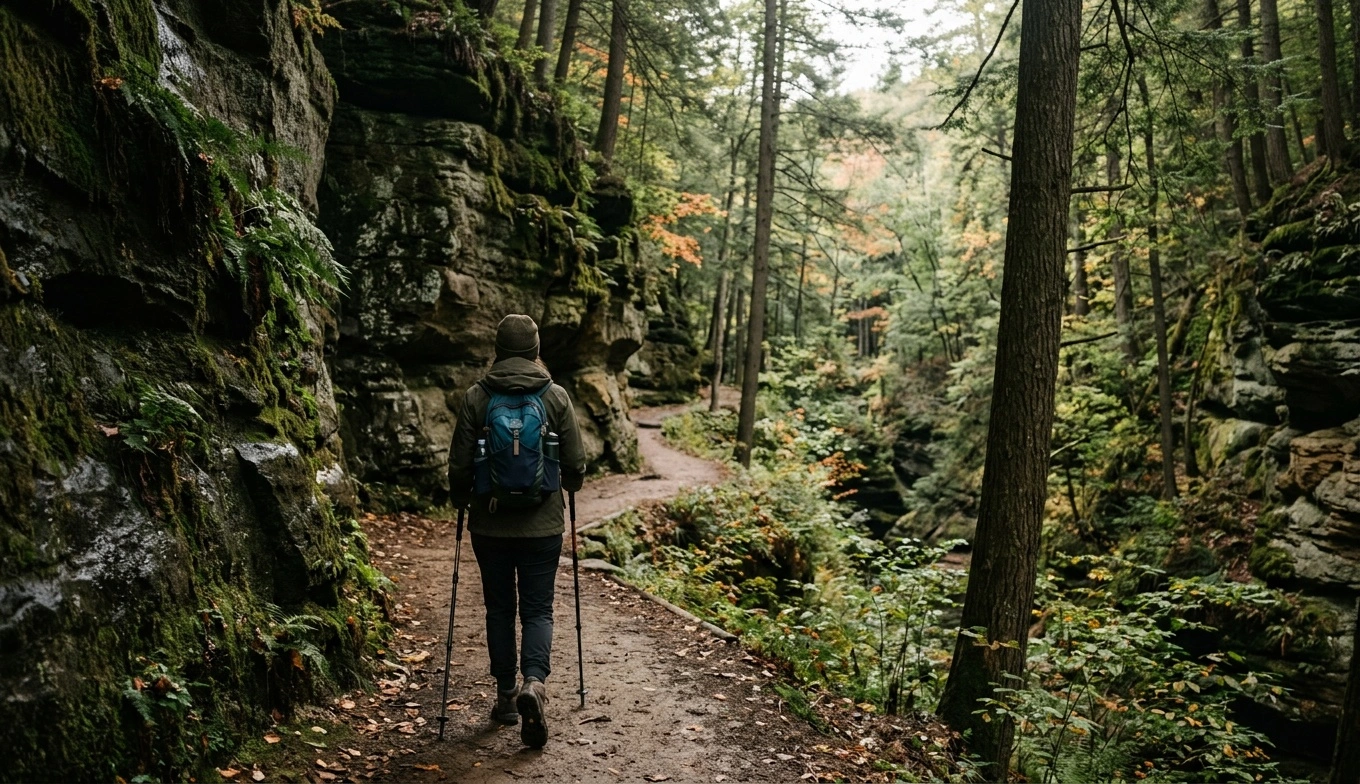
A hocking hills solo trip gives you time to hike at your own pace, photograph quiet rock shelters, and enjoy the forest without a fixed group schedule. The region works well for independent travelers, but preparation matters. Cell service fades quickly, and many trails include steep stairs, narrow ledges, and wet stone.
Hocking Hills sits in southeastern Ohio, about an hour southeast of Columbus. The state park spreads its main attractions across several separate trail areas. A car remains the simplest way to reach the trailheads, lodging, and nearby restaurants.
Planning a hocking hills solo trip
Two or three days allow enough time to see the major sites without rushing. Stay near Logan, Laurelville, or the state park to reduce your driving time. Cabins offer privacy, while inns and established campgrounds provide more contact with other travelers.
Download maps before leaving town. You should also save your lodging address, emergency contacts, and driving directions for offline use. Paper maps provide a useful backup when your phone loses its signal or battery.
Tell a friend where you plan to hike and when you expect to return. Send an update whenever you regain service. For extra security, carry a whistle, small first-aid kit, flashlight, and portable battery.
Best Solo Hiking Areas in Hocking Hills
Hocking Hills State Park includes several distinct hiking areas rather than one central trail network. Driving times between trailheads can reach 20 minutes or more. Plan each day by location, daylight, and expected trail conditions.
Old Man’s Cave
Old Man’s Cave offers the area’s best-known introduction to sandstone cliffs, waterfalls, and recessed caves. The routes include stone steps, bridges, and sections beside the gorge. Trail signs direct hikers through the most heavily traveled sections.
Arrive early if you want quieter paths and easier parking. Weekends and fall afternoons draw larger crowds. Morning light also makes the rock walls easier to photograph without harsh contrast.
Cedar Falls
Cedar Falls sits along Queer Creek and carries the most water after periods of rain. The trail descends through hemlocks and sandstone formations before reaching the falls. Wet steps can become slick, so shoes with firm traction help.
Never climb on the waterfall or leave the marked route for a closer view. Sandstone edges can crumble without warning. Stay behind barriers and follow posted trail directions.
Ash Cave
Ash Cave features a wide horseshoe-shaped recess and a seasonal waterfall. The paved gorge trail provides the park’s most accessible approach. It also gives solo travelers a shorter outing for arrival or departure day.
The waterfall may slow to a thin stream during dry weather. Even then, the scale of the rock shelter makes the walk worthwhile. Continue only on marked trails if you choose a longer route.
Conkle’s Hollow
Conkle’s Hollow State Nature Preserve protects a deep gorge with tall cliffs and dense forest. The lower gorge trail offers a calmer walk with fewer steep sections. The rim trail demands more care because it follows exposed cliff edges.
Solo hikers should avoid the rim during ice, heavy rain, or strong wind. Check current preserve rules before bringing a dog, since nature preserves often have stricter restrictions than state parks. Posted signs at the trailhead take priority over older online guides.
Rock House
Rock House differs from the open recesses found elsewhere in the park. This corridor-like cave has window openings cut into the sandstone by erosion. Reaching it requires stairs, uneven ground, and a steady climb back to the parking area.
Bring a flashlight, even during daylight. The cave interior stays dim, and damp rock can be difficult to judge. Keep both hands free when moving through tighter sections.
When to Visit Hocking Hills Alone
Spring brings waterfalls, cool hiking weather, and muddy trails. Summer provides long daylight hours, though heat and humidity can make gorge climbs tiring. Start early and carry more water than you expect to need.
Fall draws the heaviest traffic as the leaves change. Weekday mornings offer a quieter experience than Saturday afternoons. Reserve lodging well ahead for October trips.
Winter reveals cliff lines and frozen waterfall formations, but ice creates serious hazards. Wear traction devices when conditions require them. Skip any trail that feels unsafe rather than relying on other hikers for assistance.
What to Pack for the Trails
Wear supportive shoes with soles that grip wet stone. Pack water, snacks, rain gear, and an extra layer. Gorge temperatures can feel cooler than conditions near the parking lots.
Carry everything in a small backpack so your hands remain free. Trekking poles can help on uneven climbs, though some stairways feel narrow with long poles. A hat and insect repellent help during warmer months.
Keep food sealed and take every piece of trash with you. Do not feed wildlife or leave scraps near overlooks. Bring a reusable bag for muddy shoes if you plan to stop for dinner afterward.
Food and Supplies Near the Park
Logan has the region’s broadest selection of grocery stores, gas stations, and casual restaurants. Stock up before heading toward a remote cabin. Late-night food choices can be limited outside town, especially during slower seasons.
Pack a trail lunch that can handle a few hours in your bag. Sandwiches, apples, nuts, and firm cheese travel well without much fuss. Keep a full water bottle in the car for the drive between hiking areas.
Cabin kitchens vary widely. Confirm that your rental includes cookware, utensils, coffee equipment, and basic pantry items. Bringing a simple breakfast can save an early drive before the first hike.
Solo Safety and Trail Etiquette
Stay on marked trails and obey all closure signs. Shortcuts damage plants and may lead toward unstable cliffs. Never cross a barrier for a photograph.
Watch the time closely because darkness arrives early inside the gorges. State park trail hours and route rules may change, so review official Ohio Department of Natural Resources updates before your visit. Rangers may close sections after storms, flooding, or maintenance issues.
Give other hikers room on stairs and narrow bridges. Let faster hikers pass where the path widens. Keep headphones low or leave them off so you can hear weather, wildlife, and approaching hikers.
If an injury occurs, call 911 when service allows and provide the trail name, nearest marker, and your direction of travel. Do not move farther from a known location unless staying there creates a greater danger. A precise location helps responders reach you faster.
A Simple Three-Day Itinerary
Day One: Ash Cave and Cedar Falls
Begin with Ash Cave for an easy introduction to the landscape. Drive to Cedar Falls afterward and allow extra time for wet steps. Check into your lodging before dark and review the next day’s route.
Day Two: Old Man’s Cave and Rock House
Reach Old Man’s Cave early, then spend the morning exploring its marked routes. Eat lunch before driving to Rock House. Finish the second hike with enough daylight for the return climb.
Day Three: Conkle’s Hollow
Walk the lower gorge at Conkle’s Hollow before heading home. Choose the rim only in dry conditions and if exposed heights do not bother you. Stop in Logan for fuel, food, and a final map check before leaving the region.
Making the Most of Your Solo Visit
A well-planned hocking hills solo trip balances independence with practical safety habits. Leave room for weather changes, trail closures, and slower hiking on wet stone. A flexible schedule will serve you better than a long checklist.
Start early, carry offline directions, and choose routes that match your experience. The reward is simple: quiet forest, close views of Ohio sandstone, and enough time to notice details that groups often pass.









Share This Page