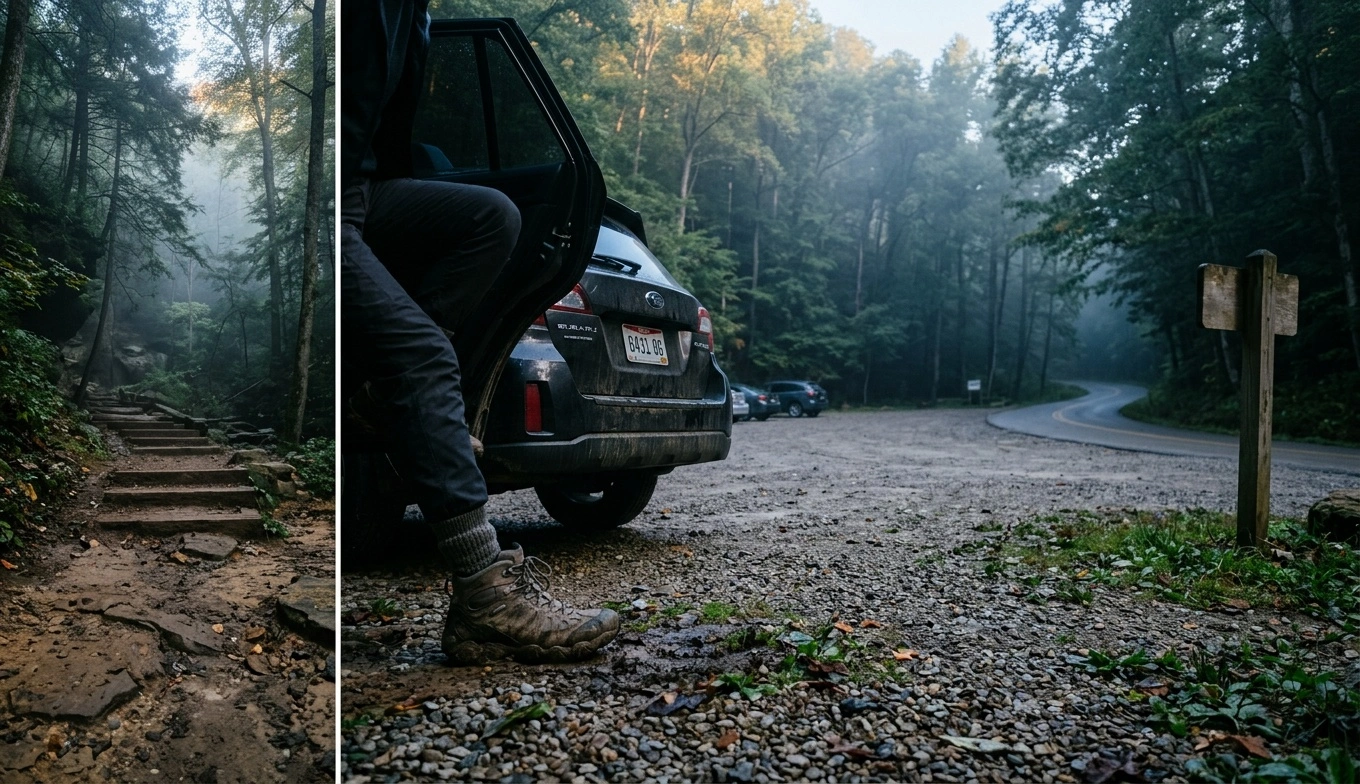
Hocking Hills State Park hours generally follow daylight use, so plan to hike from dawn to dusk. Return to your vehicle before dark. The park is open year-round, but trail access, facility schedules, and seasonal restrictions can change. Check the Ohio Department of Natural Resources (ODNR) website before leaving home.
Trails, visitor facilities, campgrounds, restrooms, and nearby nature preserves may follow different schedules. For example, a trailhead lot may remain accessible after an indoor facility closes. Winter also provides far less hiking time than June. Treat the posted closing time as the time to be off the trail, not the time to turn around.
How Hocking Hills State Park Hours Work
Most visitors should plan around daylight rather than expect every park area to keep identical hours. The trails are intended for daytime use. After sunset, stairs, uneven sandstone, narrow passages, and limited lighting make gorge routes difficult to navigate.
Late starts create particular problems at Old Man’s Cave, Cedar Falls, and Conkle’s Hollow. The bottom of each gorge grows dim before the open sky does. Leave enough time to finish the entire route in daylight.
Indoor facilities follow separate schedules. The Hocking Hills State Park Visitor Center near Old Man’s Cave may keep seasonal or holiday hours. Campground offices and other staffed buildings can operate on different timetables. A building may be closed even when nearby trails remain open.
Regular park hours do not guarantee access to every route. ODNR may close trails because of ice, high water, storm damage, maintenance, or other hazards. Check official notices shortly before your visit. Then read all signs and closure notices at the trailhead.
Conkle’s Hollow is a state nature preserve, not part of the state park itself. Its operating hours, trail rules, and pet restrictions may differ. Rockbridge, nearby preserves, state forests, and private attractions also set their own schedules.
Best Arrival Times for Hocking Hills State Park
Arrive near the beginning of daylight for easier parking and quieter trails. This strategy matters most on weekends, holidays, and peak fall-color days. Before 8 a.m. is a practical weekend target, although it does not guarantee a parking space.
Weekday mornings are usually more manageable. However, spring break, summer vacation, and warm October weekdays can still draw large crowds. Starting early also gives you more flexibility if your first-choice lot is full.
Old Man’s Cave receives the most consistent traffic. It is the park’s best-known hiking area and sits next to the main visitor center. Cedar Falls and Ash Cave can also become congested when parking spaces turn over slowly.
Rock House, Cantwell Cliffs, and Conkle’s Hollow sometimes feel quieter. Their lots can still fill because parking space is limited. Do not assume a less central location will have an open space.
| Area | Practical arrival target | Why timing matters | Planning note |
|---|---|---|---|
| Old Man’s Cave | Early morning, especially on weekends | This area usually draws the heaviest and most consistent trail traffic. | Make it your first stop instead of trying to fit it in after lunch. |
| Cedar Falls | Morning, or later with ample daylight remaining | Spaces turn over as visitors finish short hikes or continue onto longer routes. | Do not begin a long gorge connection late in the afternoon. |
| Ash Cave | Morning for easier parking | The short approach attracts families, groups, and visitors making quick stops. | Allow extra time for slow walkers and rest breaks. |
| Conkle’s Hollow | Early morning | The preserve is popular, but parking and usable trail space are limited. | Check preserve hours, closures, and pet rules separately. |
| Rock House | Morning or early afternoon | The route includes stairs, uneven footing, and a dark rock corridor. | Reserve enough daylight for the climb back to the parking area. |
| Cantwell Cliffs | Morning to early afternoon | It requires more driving from the central park areas than many visitors expect. | Avoid saving it for the final hour of the day. |
Midday is usually the hardest time to reach the main trailheads. If no legal space is available, continue to another developed area. Never wait in a travel lane, block another vehicle, or park on a road shoulder.
Do not rely on a park-wide shuttle unless you confirm that a service currently operates. Plan a schedule that works with your own vehicle and legal parking. Keep at least one alternate trail area in mind.
How the Main Areas Fit Into a Day
The major trail areas sit along winding two-lane roads rather than around one central lot. Drive times may look short on a map. Traffic, sharp bends, slow vehicles, and parking searches can extend each trip.
Cell service is unreliable in many low areas. Download directions before leaving your cabin, hotel, or campground. Save the return route as well.
| Typical connection | Approximate driving time | What to expect |
|---|---|---|
| Old Man’s Cave to Cedar Falls | About 10 to 15 minutes | The drive is short, but busy parking areas can add time at both ends. |
| Old Man’s Cave to Ash Cave | About 15 to 20 minutes | This pairing works well for a first visit when you begin early. |
| Old Man’s Cave to Conkle’s Hollow | About 15 to 20 minutes | Conkle’s Hollow follows state nature preserve rules. |
| Old Man’s Cave to Rock House | About 20 to 30 minutes | The winding roads can make the trip feel longer than the mileage suggests. |
| Old Man’s Cave to Cantwell Cliffs | About 25 to 35 minutes | This distant area works best as a planned stop rather than a last-minute addition. |
These times are planning ranges, not guarantees. Construction, weather, and seasonal traffic can change them. Most first-time visitors can comfortably explore two or three main areas in one day.
Trying to reach every named feature often leads to more driving than hiking. Choose a few priorities and leave room for delays. A flexible itinerary makes a full parking lot easier to handle.
Longer designated trails connect some park areas. However, that does not make every trailhead suitable as overflow parking. A short road distance may translate into several miles of hiking and many stairs.
Research the exact route before attempting a point-to-point hike. You may also need a legal car shuttle. Otherwise, drive between separate trail areas and use each hike’s intended parking lot.
Planning Around Sunrise, Sunset, and Gorge Light
Official daylight and usable gorge light are different. High cliffs and tree cover darken the recesses around Old Man’s Cave, Ash Cave, Rock House, and Conkle’s Hollow. These areas may feel dark well before sunset.
The effect becomes more important during winter. Short days leave little margin for a late-afternoon start. Ice, wet leaves, or crowds can also slow your return.
Check the sunset time for Logan or Hocking County before your trip. Then work backward based on the route and your group’s pace. Account for the slowest hiker, muddy ground, photographs, and trail congestion.
Do not start a one-hour route with only one hour of daylight remaining. Build in a safety buffer. Unexpected delays are common on stairs and narrow gorge trails.
Sunrise does not immediately illuminate the gorge. Morning hikers may still encounter dim passages. Carry a small flashlight or headlamp for emergencies, but do not plan to hike after dark.
A phone flashlight drains the battery quickly. It also does a poor job of revealing wet steps, roots, and drop-offs. Save your phone for navigation and emergency communication.
If you arrive late, choose a shorter designated route. Ash Cave’s lower approach may suit some visitors better than a long gorge connection. Check current access and trail conditions before starting.
Parking, Restrooms, Water, and Cell Service
Individual trailheads provide most parking at Hocking Hills. Even a large lot can fill during peak periods. Spaces may turn over slowly when visitors choose longer hikes.
An early arrival improves your chance of finding legal parking. It also puts you on the trail before narrow sections become crowded. Have a backup destination ready in case your first lot is full.
Never create a parking space along the road or on grass. Do not block entrances or stop where your vehicle narrows the travel lane. Local roads have sharp curves and limited sight distance.
Instead, move to another developed area or take a meal break. You can also return later if daylight allows. Parking illegally creates hazards for drivers, pedestrians, and emergency vehicles.
Several developed areas have restrooms, but the facility type varies by location and season. Use a restroom when one is available. The next trailhead may not offer the same setup.
Indoor restrooms may close before the surrounding day-use area. Maintenance or cold weather can also affect availability. Check current facility information when planning your visit.
Bring drinking water in your vehicle and carry enough for each hike. Do not expect every lot to have a working fountain or bottle-filling station. Cold weather and maintenance can interrupt water service.
Never use water from streams, pools, or waterfalls as untreated drinking water. Natural water can contain harmful microorganisms. Carry more water than you expect to need during hot or humid weather.
Cell signals often disappear in gorges and along back roads. Save an offline map and take screenshots of your route. Set a meeting point before anyone separates from the group.
If you are staying in a remote cabin, download both sets of directions in advance. Save the route to the trailhead and the route back to your lodging. A cabin address may not load once you lose service.
Seasonal Conditions That Affect Park Access
Winter
Winter brings the shortest hiking window and some of the most hazardous footing. Stone steps, boardwalks, and wooden stairs can develop ice even when nearby roads look clear. Shaded sections may remain frozen throughout the day.
Wear sturdy shoes and carry traction devices when conditions warrant them. Check official closure notices before driving to the park. Never continue around a barrier or trail-closed sign.
Spring
Spring often produces stronger waterfall flow. It also brings mud, wet stairs, and possible high-water hazards. Stay on designated trails and keep away from the edges of waterfalls and pools.
Do not treat wading or swimming as permitted activities. ODNR allows climbing and rappelling only in designated locations under current rules. Check regulations before bringing specialized equipment.
Summer
Summer provides long daylight hours, but an early start still helps. Heat, humidity, thunderstorms, and crowded parking lots can slow a group. Carry water and monitor the forecast throughout the day.
Waterfall flow may decrease during dry periods. Recent rainfall often affects conditions more than the calendar. Never enter a closed area to get closer to the water.
Fall
Fall combines cooler hiking weather with some of the year’s heaviest traffic. Peak-color weekends can crowd roads and trailheads from morning through afternoon. Arrive early and keep an alternate area in mind.
Avoid schedules that depend on finding immediate parking at every stop. Choose your priority hike first. Save a shorter route for later in the day.
Common Timing Mistakes
The most common mistake is treating “open until dusk” as permission to start a full hike near dusk. Trail time includes more than steady walking. Restroom stops, photographs, stairs, and slower hikers all add minutes.
Visitors also underestimate Old Man’s Cave, Cedar Falls, and Ash Cave. These are not roadside overlooks that take only a few minutes. Even shorter routes require walking, elevation changes, and a return to the correct parking area.
Crowds can slow movement at narrow passages and stairways. Current trail management may also direct traffic along one-way sections. Read posted signs instead of relying on an old map or previous visit.
Live navigation creates another common problem. Weak cell service can prevent maps from loading at the moment you need them. Download maps and confirm the correct trailhead before setting out.
A cabin address, park area, and trailhead may represent three different destinations. Check each location before the trip. This step can prevent a long detour on winding roads.
Pet rules also vary by location. Keep pets leashed wherever officials allow them, and check preserve-specific restrictions. Confirm current regulations before taking a dog to Conkle’s Hollow.
Safety Near Closing Time
Stay on designated trails, even if a shortcut appears to lead toward the lot. Off-trail travel can put you above cliffs or below unstable rock. It may also leave you on steep ground without a safe exit.
Falls from cliffs and rim edges have caused serious injuries and deaths in the Hocking Hills region. Keep children close and remain well back from unprotected edges. Darkness makes these hazards harder to judge.
Use extra care on rim trails late in the day. Conkle’s Hollow Rim Trail has sheer drop-offs and limited railing. It does not suit young children who cannot stay close or hikers with unsteady footing.
Keep leashed dogs close wherever preserve rules permit pets. A leash does not replace control near cliffs, stairs, or crowded passages. Check current pet rules before entering the preserve.
Wet leaves can conceal roots and stone edges. Ice may linger in shaded recesses after sunny areas thaw. Sturdy footwear helps throughout the year, while traction devices improve control during winter.
If darkness, high water, ice, or a storm approaches, shorten the hike. Return by the designated route. Never climb a slope, cross a closed section, or wade through water to save time.
Call for help when you have service if an emergency occurs. Give responders the trail area, nearest named landmark, and your direction of travel. Clear location details can help crews reach you faster.
A Practical Hocking Hills Arrival Plan
For a weekend visit, check current Hocking Hills State Park hours and closure notices the evening before. Arrive at your first-choice trailhead early the next morning. Put Old Man’s Cave, Conkle’s Hollow, or another priority hike first.
Save a shorter trail or scenic stop for later. Carry water, offline directions, sturdy shoes, and a simple backup plan. If the first lot is full, move to a legal alternative instead of waiting in the roadway.
Build driving time, restroom stops, and a daylight buffer into your schedule. Two or three well-planned areas usually make a better day than a rushed tour of every trailhead. Adjust the itinerary when weather or parking changes your plan.
Before every trip, verify Hocking Hills State Park hours, facility schedules, closures, and pet policies through ODNR and Ohio State Parks. Conditions can change quickly after storms or during winter weather. An early start and a flexible plan leave more time for hiking and less time for searching for parking.









Share This Page